

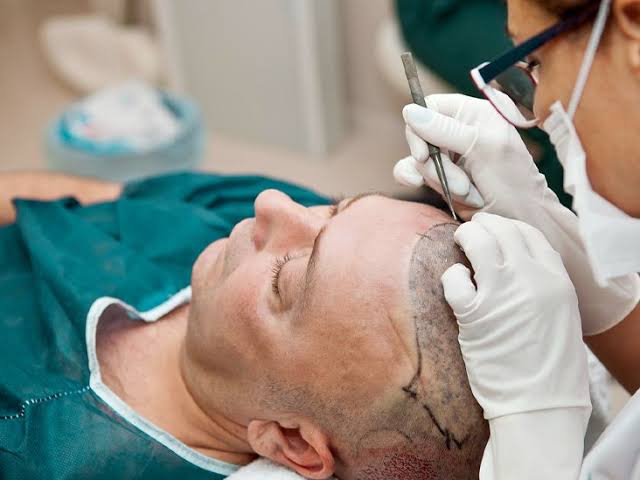
For those with serious hair loss, receding hairlines, or thinning hair, hair transplantation has grown in popularity. Successful outcomes rely on a number of crucial criteria, even if contemporary advances have enhanced the accuracy and attractiveness of hair restoration operations. The quality of donor hair is one of the most important factors. People may set reasonable expectations and make well-informed treatment selections by being aware of how donor hair affects the transplantation procedure.
Recognising Donor Hair’s Function In Hair Transplantation
Healthy hair follicles taken from parts of the scalp where hair development is often more resistant to pattern baldness are referred to as donor hair. Usually taken from the sides or back of the head, these follicles are transplanted into places where hair loss is occurring.
The availability, strength, and health of these follicles play a major role in the procedure’s effectiveness. Hair transplants UK patients should be aware that donor hair quality is thoroughly assessed prior to starting treatment. A professional evaluation helps in determining if there are enough healthy follicles available to get the required coverage without sacrificing the donor area’s aesthetic appeal.
The Significance Of Hair Density In Donor Areas
The quantity of follicular units found in a certain region of the scalp is referred to as hair density. When it comes to organising transplant surgeries, those with higher donor hair density could have more options.
Density by itself, however, does not ensure success. The distribution of follicles, scalp features, and hair thickness all affect the final result.
To decide how many grafts may be safely removed, a trained surgeon considers these variables. Careful planning is necessary to achieve a balanced look since removing too many follicles from a small donor location might result in noticeable thinning.
The Effect Of Hair Thickness On Natural Outcomes
The amount of coverage that transplanted follicles can provide is greatly influenced by the thickness of individual hair strands. Because each strand takes up more visual space, thicker hair often gives the impression of being fuller.
Finer hair, on the other hand, could need more grafts to provide the same coverage. The final look may also be influenced by the texture, curl pattern, and colour contrast between the hair and scalp.
When assessing hair transplant costs, these factors are crucial since the quantity of grafts needed, the difficulty of the procedure, and the method of treatment may all have an impact on total costs. Instead of choosing a course of therapy only on the basis of cost, patients should prioritise adequate surgical planning.
The Value Of Healthy Hair Follicles
For a transplant to be effective, healthy follicles are necessary. To reduce harm, follicles must be properly removed, handled, conserved, and implanted throughout the process.
Donor hair appropriateness may be impacted by variables such as pre-existing scalp diseases, prior surgical operations, and certain types of hair loss.
Additionally, surgeons take into account if the donor location exhibits gradual thinning. Long-term outcomes from follicular transplants from unstable regions can be less predictable.
Before prescribing therapy, medical experts may detect any issues with a thorough scalp check.
How Surgical Planning Is Affected By Donor Hair Quality
Since each patient’s hair loss pattern is unique, customised treatment planning is required. Surgeons must strike a compromise between the requirement to maintain donor follicles for potential future surgeries and the goal of quick coverage. People interested in hair transplants London should seek out facilities that do thorough donor area evaluations and provide realistic treatment options.
When creating a restoration plan, skilled specialists take into account the patient’s age, current hair loss trend, expected advancement, and available donor supply. This method supports optimal coverage and realistic hairline design while preventing needless follicle extraction.
Preserving The Donor Area For Upcoming Hair Repair
New follicles are not produced during hair transplantation. Rather, it moves existing hair from one place to another. Donor hair is thus a finite resource that has to be handled with care. Overharvesting may limit future restoration choices and permanently lower density in the donor location.
Maintaining enough distance between extraction sites and protecting the surrounding hair are the fundamental goals of responsible surgical methods. In order to promote recovery and minimise preventable problems, patients should also adhere to postoperative recommendations.
Conclusion
The acceptability, look, and long-term potential of hair transplantation are all heavily influenced by the quality of the donor hair. Treatment planning is influenced by a number of factors, including donor area stability, hair density, strand thickness, and follicle health. In addition to protecting existing hair, a careful medical evaluation and responsible extraction technique increase the possibility of outcomes that seem real. Patients may approach hair restoration with more confidence and reasonable expectations when they are aware of these factors.